
Submit your email address to get a link for quick download on your desktop and get started!
By compiling lists of active malicious domains, Malc0de enabled administrators to configure "sinkholes." A DNS sinkhole intercepts requests traveling to known malicious domains and returns a false IP address, effectively neutralizing the malware's ability to communicate with its Command and Control (C2) server. How the Cybersecurity Community Used Malc0de
The Malc0de Database: A Historical Beacon in Malware Threat Intelligence
The cybersecurity ecosystem has changed. When Malc0de started, most malware was distributed via compromised legitimate websites. Today, we see massive shifts to living-off-the-land binaries (LOLBins), phishing via PDF attachments, and command-and-control (C2) over encrypted DNS (DoH) or social media APIs.
for a security tool or research project using this data, you should focus on extracting specific indicators of compromise (IoCs). Key Features from Malc0de
The hosting servers associated with the malicious domains.
Today, threat hunters and defenders rely on modern, highly scalable ecosystems that evolved from the concepts pioneered by platforms like Malc0de. Contemporary alternatives include:

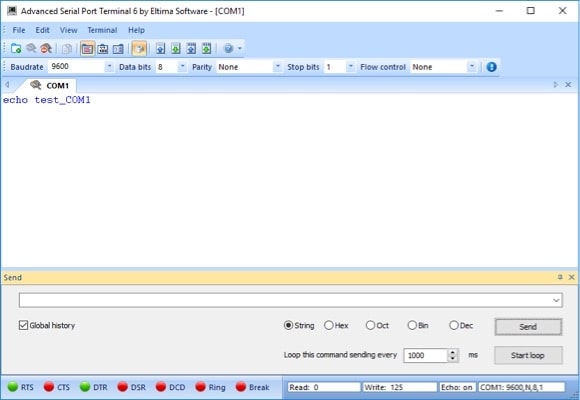
Advanced Serial Port Terminal is a versatile application that provides serial terminal software with which to address many communication challenges. It should be in every serial developer’s software toolbox for sending data over serial connections to facilitate hardware and software testing and debugging.
Some specific uses of this serial terminal solution are:
It is apparent that Serial Port Terminal is a great free alternative for users employing HyperTerminal on Win 7, 10, or other versions of Windows. It offers more functionality than HyperTerminal and is an important tool for serial software and hardware development. It is a synthesis of a serial terminal and COM port sniffer in a single application.
By compiling lists of active malicious domains, Malc0de enabled administrators to configure "sinkholes." A DNS sinkhole intercepts requests traveling to known malicious domains and returns a false IP address, effectively neutralizing the malware's ability to communicate with its Command and Control (C2) server. How the Cybersecurity Community Used Malc0de
The Malc0de Database: A Historical Beacon in Malware Threat Intelligence
The cybersecurity ecosystem has changed. When Malc0de started, most malware was distributed via compromised legitimate websites. Today, we see massive shifts to living-off-the-land binaries (LOLBins), phishing via PDF attachments, and command-and-control (C2) over encrypted DNS (DoH) or social media APIs.
for a security tool or research project using this data, you should focus on extracting specific indicators of compromise (IoCs). Key Features from Malc0de
The hosting servers associated with the malicious domains.
Today, threat hunters and defenders rely on modern, highly scalable ecosystems that evolved from the concepts pioneered by platforms like Malc0de. Contemporary alternatives include: