Maintenance break
Monday (16.06.2024), 05:30 - 09:30 UTC
Our system will be temporarily unavailable due to new features implementation
Monday (16.06.2024), 05:30 - 09:30 UTC
Our system will be temporarily unavailable due to new features implementation
This command tells FFmpeg to use the H.264 video codec ( libx264 ), set it to the broadly compatible High Profile at Level 4.1 (for 1080p), and use the AAC audio codec.
user wants a long article about "ajb 63 mp4". This appears to be a specific file or codec identifier. I need to gather comprehensive information. I'll search for this term across multiple dimensions: general info, file format/codec details, related software, potential issues, and downloads. I'll use both English and Chinese search terms given the ambiguity. search results for "ajb 63 mp4" show a variety of unrelated meanings, from an artist to a politician, a solar junction box, and a vehicle. The specific term is not clearly defined as a common codec or file type. The search for "ajb 63 mp4 codec" suggests AJB might mean "Adaptive Jitter Buffer," but this is a networking term, not a video codec. Searches for downloads, file extensions, and Chinese queries also yield no definitive match. This indicates that "ajb 63 mp4" is likely a niche or misspelled term. The user wants a long article, so I need to structure a helpful response that explores possible interpretations: as an Adaptive Jitter Buffer in relation to MP4 streaming, as a potential filename convention, and as a video with specific encoding parameters (like bitrate or frame rate). The article should be informative and practical, covering technical explanations, video playback issues, and troubleshooting. I will now search for more specific and technical terms to gather detailed information. search results provide information on adaptive jitter buffer, video playback stuttering, and H.264 profiles for iPhone compatibility. The user's query "ajb 63 mp4" is likely a specific filename or a codec parameter. The article can interpret it in several ways: as an Adaptive Jitter Buffer (AJB) for MP4 streaming, as a filename indicating a video with specific encoding parameters (e.g., 63 Mbps bitrate or 63 fps frame rate), or as a file with compatibility issues. The article will cover these interpretations, focusing on technical details, playback issues, and practical solutions. I will structure the article with an introduction explaining the ambiguity, followed by sections on AJB as a buffer, AJB as a filename, AJB as a parameter, troubleshooting, and advanced encoding. I will cite relevant sources. search term "ajb 63 mp4" might seem cryptic at first glance. It's not a standard industry acronym, but it's a phrase that surfaces when people encounter specific technical issues with digital video. The most technically sound and useful interpretation of "ajb 63 mp4" is related to a specific network condition (Jitter), the encoding profile and level of an MP4 file, and its compatibility across different devices.
In media asset management, prefixes like "AJB" usually refer to a specific project code, a broadcaster identification string, an automated camera brand, or a proprietary compression algorithm. For example, it is frequently tied to specific equipment batches, indexing databases, or legislative/courtroom recording systems that log data chronologically.
The most probable technical definition of "AJB" in this context is . A jitter buffer is a shared data area where voice or video packets are collected, stored, and sent to the processor at evenly spaced intervals, helping to compensate for network delays, known as jitter. ajb 63 mp4
The first step is to break down the keyword. "MP4" is a universally recognized video format, so the file is a video. The other parts, "ajb" and "63," are the variables that determine its origin. A comprehensive search reveals several primary possibilities, each with a distinct and compelling story.
The number "63" in the query strongly hints at the parameter of the video's H.264 codec. The H.264 (also known as AVC or MPEG-4 Part 10) is the video compression standard used by virtually all MP4 files. Levels set maximums for various playback requirements, including resolution, frame rate, and bitrate.
The original 650mAh battery is likely dead. Any standard 602030 or 702030 Li-Po battery (3.7V, 500-800mAh) will fit inside the AJB 63’s case. Desolder the old battery leads and solder in the new one (red to positive B+, black to negative B-). This command tells FFmpeg to use the H
An Adaptive Jitter Buffer is a sophisticated software tool that collects these arriving packets and holds them for a few milliseconds. By smoothing out the natural irregularities in arrival times, the buffer ensures the video's decoder receives frames at a consistent, steady rate. This process is crucial for eliminating the frustrating stutters, skips, and freezes that can ruin a video streaming experience.
The acronym and the number 63 also appear in official records, which may be unrelated to the mp4 file but could cause search overlap:
The number "63" adds another layer of potential meaning. It could refer to: I need to gather comprehensive information
The choice of an .mp4 file extension for high-volume automated exports like "ajb 63" provides explicit technical advantages regarding bandwidth, storage, and cross-platform utility. Technical Parameter Standard Specification Operational Benefit for Media Archives H.264 (AVC) / H.265 (HEVC) Maximum compression with minimal quality loss. Audio Codecs Low bit-rate requirements for clear data logs. Streaming Protocol RTSP / HTTP Live Streaming Native compatibility for web portals and servers. Metadata Tagging Allows easy embedding of timecodes and system logs. Common Operational Environments
Click the green "Start Encode" button at the top of the screen to output a highly compatible file. Managing Storage: MicroSD Cards and File Systems
However, I can offer several possible interpretations based on how such a string is typically structured, and provide a detailed breakdown for each plausible scenario.

years
of experience
users trusted
our solutions
team
of experts
processed
documents yearly

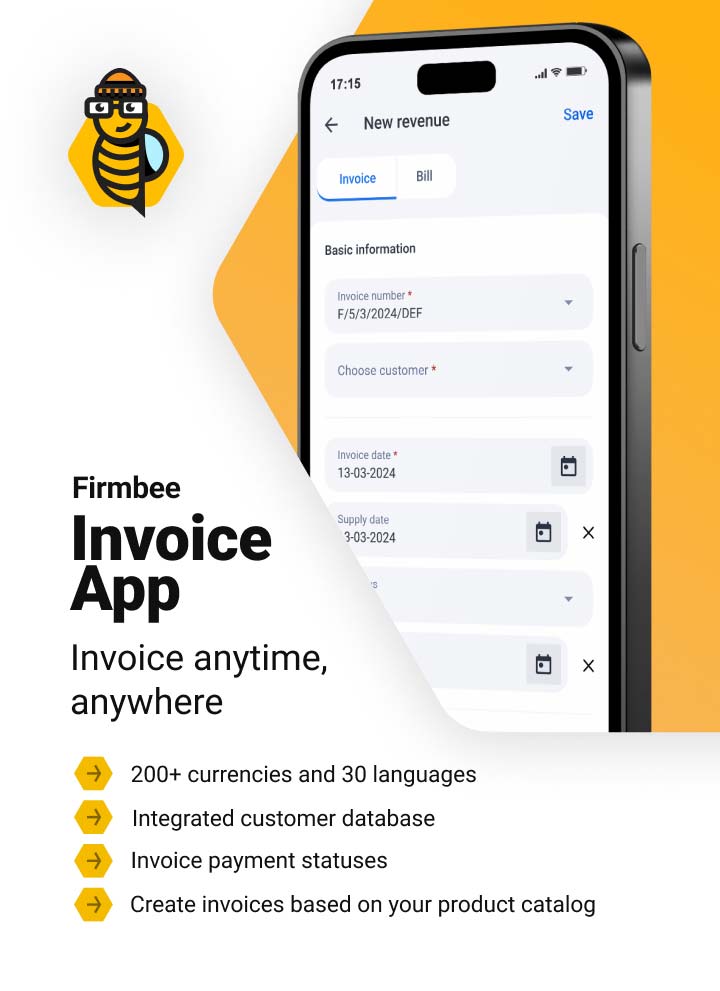
Start working with Firmbee to elevate your firm's efficiency. Manage teams and tasks with our project management module. Use CRM tools, regain finance control, and issue invoices with our free invoicing app.